
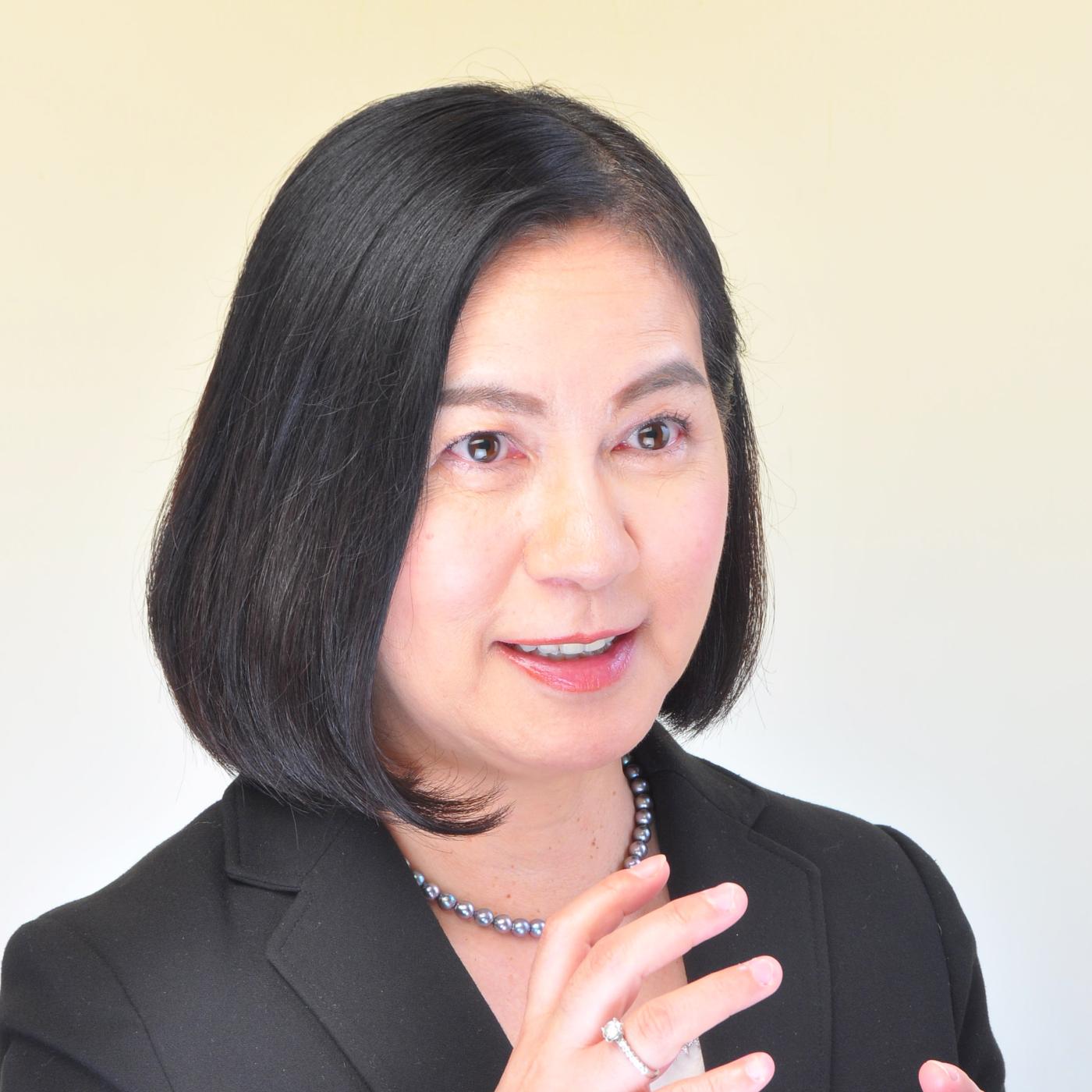
Keiko Torii
- Professor
- Johnson & Johnson Centennial Chair in Plant Cell Biology
- Investigator, Howard Hughes Medical Institute
- Molecular Biosciences
- Interdisciplinary Life Sciences Graduate Programs
Contact Information
Biography
Torii received B.S., M.S., and Ph.D. degree from the University of Tsukuba. She became a tenure-track Assistant Professor at the Department of Biology (formerly Botany), University of Washington in 1999, then became Associate Professor in 2005, Full Professor in 2009, and received the title of College of Arts and Sciences Endowed Distinguished Professor of Biology in 2011. Since 2011, Torii is an investigator of Howard Hughes Medical Institute (HHMI). Currently, she is Johnson & Johnson Centennial Chair in Plant Cell Biology at the Department of Molecular Biosciences, The University of Texas at Austin. Since 2013-2022, Torii ran her second lab at the Institute of Transformative Biomolecules (WPI-ITbM) at Nagoya University, Japan as an Oversea Principal Investigator.
Research
Our group (Torii Lab) studies how positional cues govern tissue patterning and how stem cells are established, committed to specific fates, and differentiated into specialized cell types. To address such fundamental questions in developmental biology, we use plant stomatal development as a model. Stomata are small cellular valves that facilitate gas exchange between plants and the atmosphere while minimizing water loss. The presence of stomata is essential for plant survival and our global environment. Our work has elucidated: 1) intricate cell-cell communications mediated by peptide hormones and receptor kinases influence the pattern of stem cell divisions and fate specification; 2) master regulatory bHLH transcription factors govern cell through interplay with cell-cycle and chromatin (epigenetic) regulators; and 3) how these core networks of stomatal patterning and differentiation are re-wired to enable plants to adapt to underwater (aquatic) environments. We use a model plant Arabidopsis as well as the amphibious Brassicaceae species, Rorippa.
Additionally, in collaboration with organic chemists, chemical biologists, and structural biologists, we are developing small molecules and orthogonal ligand-receptor systems with novel activities to understand and manipulate signaling pathways and cross-talks between stomatal development and immunity.
Research Areas
- Molecular Biology or Genetics
- Biophysics or Structural Biology
- Biochemistry
Fields of Interest
- Plant Biology
- Cell and Developmental Biology
- Molecular Biology, Genetics & Genomics
- System and Synthetic Biology
Centers and Institutes
- Interdisciplinary Life Sciences Graduate Programs
Education
- B.Sci., M.S., Ph.D.: Biology (Biochemistry and Biophysics). University of Tsukuba, Japan
Publications
Awards
- 2025 Silver Medal, International Association of Plant Growth Substances
- 2024 Elected Int Member, National Academy of Sciences (NAS)
- 2024 Elected Member, Texas Academy of Medicine, Engineering, Science and Technology (TAMEST)
- 2024 Medal of Honor with Purple Ribbon, The Emperor of Japan
- 2023 Stephen Hales Prize, American Society of Plant Biologists (ASPB)
- 2023 Bateson Lecture, John Innes Centre (JIC), UK
- 2021 Asahi Prize
- 2015 Saruhashi Prize
- 2015 Fellow, American Society of Plant Biologists (ASPB)
- 2015 Science Lectureship Award, Chiba University, Japan
- 2014 Inoue Prize for Science
- 2012 Elected Fellow, American Association for the Advancement of Sciences (AAAS)
- 2012 Elected Member, Washington State Academy of Sciences (WSAS)
- 2010 Undergraduate Research Mentor Award, University of Washington