
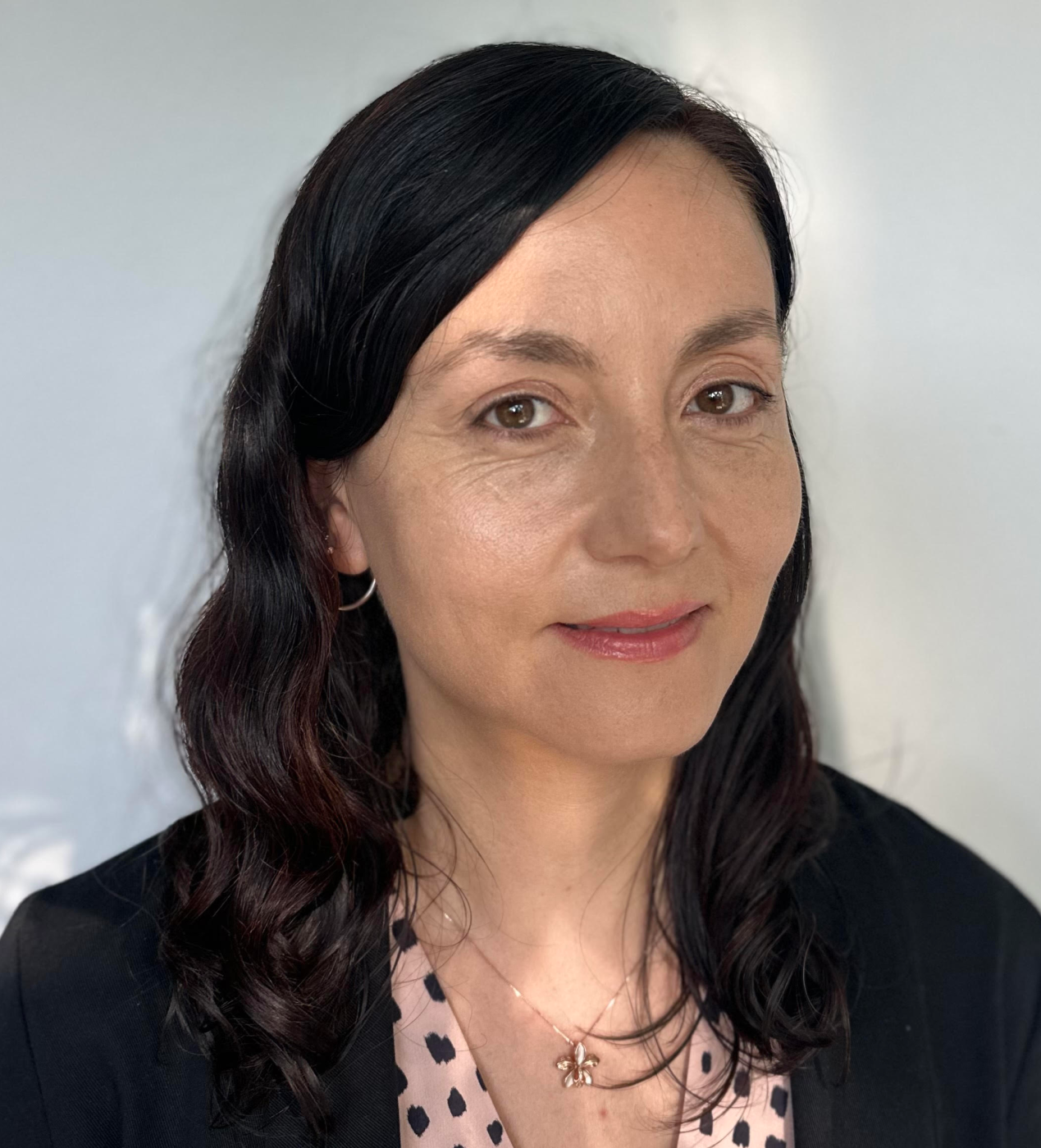
Elif Sarinay Cenik
- Associate Professor
- Molecular Biosciences
- Interdisciplinary Life Sciences Graduate Programs
We welcome inquiries from motivated graduate students and from first and second year undergraduates interested in gaining research experience and pursuing PhD or other research intensive careers. Interested students should email a brief description of their interests, goals, and availability.
Contact Information
Biography
Elif Sarinay Cenik is an Assistant Professor in the Department of Molecular Biosciences at The University of Texas at Austin. She earned her PhD in Biochemistry and Molecular Pharmacology in the laboratory of Dr. Phillip D. Zamore at the University of Massachusetts Medical School and the Howard Hughes Medical Institute, where she studied the biochemical mechanisms of RNA interference. She subsequently conducted postdoctoral research in Dr. Andrew Z. Fire's lab at Stanford University School of Medicine, investigating translational regulation and the developmental functions of ribosomes.
Her laboratory now studies how ribosome biogenesis, nucleolar organization, and translation are coordinated with development, metabolism, and aging. She is committed to rigorous, reproducible research and to mentoring students and postdoctoral researchers as they develop into independent scientists.
Research
Ribosomes are among the most abundant and energetically costly molecular machines in the cell, and their production is centered in the nucleolus, the largest membraneless compartment within the nucleus. Despite their fundamental importance, we still understand relatively little about how metazoan cells coordinate ribosome synthesis with other cellular pathways or how ribosome status is communicated across tissues to regulate organismal growth, development, metabolism, and aging.
The Sarinay Cenik laboratory investigates how ribosome biogenesis, nucleolar function, and translational regulation are integrated with gene expression and organismal physiology. We are particularly interested in how cells sense changes in the protein synthesis machinery, how these signals intersect with metabolic and stress response pathways, and how they are communicated between tissues.
The nucleolus is best known as the site of ribosomal RNA synthesis and ribosome assembly, but its organization is also closely linked to genome regulation. We investigate how RNA polymerase I activity and nucleolar integrity influence chromatin organization. Current work examines how nucleolar dynamics are coupled to histone modifications and chromosome organization, and how ribosome production connect with genome architecture.
Ribosome biogenesis must also be coordinated across cells and tissues. Our laboratory studies tissue-specific ribosome-synthesis checkpoints that can reversibly arrest growth throughout the organism. We seek to define the intercellular signals that communicate ribosome status, determine how different tissues contribute to synchronized growth, and understand how these mechanisms interact with nutrient-sensing and developmental pathways.
We also examine how alterations in ribosomal proteins and translation affect mitochondrial function, cellular metabolism, and organismal aging. This work seeks to explain why defects in different components of the ribosome produce distinct physiological outcomes and how tissue-specific modulation of ribosome production influences health and longevity.
We combine genetics, molecular and cell biology, quantitative imaging, genomics, proteomics, and computational approaches in C. elegans and mammalian systems. Through these studies, we aim to establish the nucleolus and ribosome as regulatory hubs that connect cellular state with genome organization, metabolism, development, and aging.
Research Areas
- Molecular Biology or Genetics
- Computational Medicine or Computational Science
- Human Development
Fields of Interest
- Molecular Biology, Genetics & Genomics
Education
- PhD, Howard Hughes Medical Institute, University of Massachusetts Medical School
Publications
Selected recent publications:
RNA Pol I shapes meiotic chromatin, germline H3K4me3 dynamics, and oogenesis independent of ribosome assembly. Mejia-Trujillo R*, Zhao Q*, Abraham F, Rahman A, Cenik ES. . Cell Reports, 2026, 45(2), 116866. Article link * equal contribution
Cycloheximide resistant ribosomes reveal adaptive translation dynamics in C. elegans. Zhao, Q, Bolton BM, Rothe R, Tachibana R, Cenik C, Cenik, ES. Genetics. 2026 Jan 7;232(1):iyaf189. Article link
Differential impacts of ribosomal protein haploinsufficiency on mitochondrial function. Surya A, Bolton BM, Rothe R, Mejia-Trujillo R, Leonita A, Zhao Q, Arya A, Liu Y, Rangan R, Gorusu Y, Nguyen P, Cenik C, Sarinay Cenik E. Journal of Cell Biology, 2025 Mar 3;224(3):e202404084. Article link
Inhibition of ribosome biogenesis in the epidermis is sufficient to trigger organism-wide growth quiescence independently of nutritional status in C. elegans Zhao, Q, Rangan, R, Weng, S, Ozdemir, C , Cenik, ES. PLOS Biology, 2023. Article link
Awards
- Maximizing Investigators' Research Award (MIRA), National Institute of Health, NIGMS, 2026
- Welch Foundation Research Grant, 2023
- UT Austin CNS Catalyst Award, joint with Jon Pierce, 2022
- University of Texas, Austin, College of Nature Sciences, Faculty Service Award, 2021
- Walter V. and Idun Berry Postdoctoral Fellowship Program, 2013-2016
- Stanford School of Medicine Dean's Postdoctoral Fellowship, 2012-2013